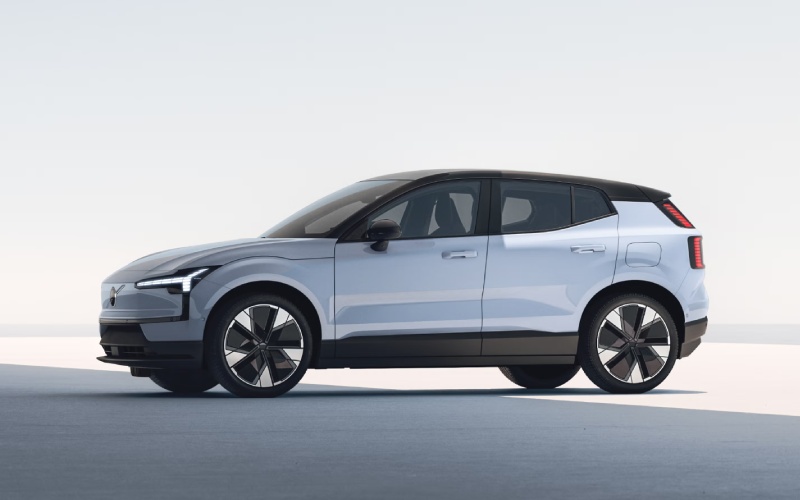
Bob Penkhus Volvo Cars - Is the 2026 Volvo EX30 or 2026 Nissan LEAF better for daily EV driving near Monument, CO?
One of the most common questions EV shoppers ask is simple: should a daily driver prioritize maximum range, or should it balance range with performance, comfort, charging confidence, and capability? When comparing the 2026 Volvo EX30 and the 2026 Nissan LEAF, that question becomes especially relevant. The redesigned LEAF brings a familiar name into a new generation with a sleek shape, available technology, a NACS Charging Port, and an estimated range of up to 303 miles for the S+ trim. That is a meaningful number for drivers who place range at the very top of the list. The EX30, however, answers the daily-driving question in a broader way. It offers up to 261 miles of EPA-estimated range in Single Motor Extended Range form, fast DC charging from 10 to 80 % in about 26.5 minutes at a 153 kW station, and an included NACS Fast Charging Adapter for access to 23,000+ additional DC fast chargers across North America.
For daily driving near Monument, CO, the better choice depends on how you define convenience. If convenience means having an electric SUV that feels quick, easy to park, upscale inside, and ready for changing road conditions along the Front Range, the Volvo EX30 has a clear advantage. It is not just an EV with a battery. It is a compact premium SUV with available all-wheel drive, one pedal drive, Google built-in, wireless Apple CarPlay, and available features like Pilot Assist, Park Pilot Assist, and a 360° camera with 3D View. Bob Penkhus Volvo Cars, serving Pueblo, Castle Rock, and Monument, recommends the EX30 for shoppers who want an EV that feels polished in more daily situations, not only on paper.
How the EX30 and LEAF approach everyday range
Range matters, and both vehicles offer usable EV driving distance. The LEAF S+ lists an estimated range of up to 303 miles, while the EX30 Single Motor Extended Range is EPA-estimated at up to 261 miles. The EX30 Twin Motor Performance offers up to 253 miles of EPA-estimated range, and the EX30 Cross Country Twin Motor Performance offers up to 227 miles. On a spec sheet, the LEAF’s top range figure is higher. In actual shopping context, many drivers also ask how the vehicle handles charging stops, navigation planning, cabin comfort, and performance when the road changes from neighborhood streets to highway speeds.
The EX30 makes charging easier through smart route support and battery preparation. When you select a charging station as your destination, the vehicle can pre-condition the battery before arrival, helping it reach the optimal temperature for charging. The center display can also show nearby charging stations on Google Maps, along with navigation and estimated charge levels on arrival. That kind of integrated planning is useful because EV convenience is not just about total miles. It is also about how easily the vehicle helps you manage those miles.
Why performance gives the EX30 an everyday advantage
The LEAF offers upgraded performance compared with previous generations, along with adjustable regenerative braking and front-wheel drive. For many drivers, that will feel familiar and efficient. The EX30 goes further by offering two distinct powertrain personalities. The Single Motor Extended Range model delivers up to 272 hp, which is already strong for a small electric SUV. The Twin Motor Performance version raises output to up to 422 hp and can accelerate from 0-60 mph in 3.4 seconds. That quick response is not only about excitement. It can also make highway merging, passing, and climbing grades feel more effortless.
Available all-wheel drive is another important distinction. The LEAF is listed with front-wheel drive. The EX30 Twin Motor Performance uses front and rear motors for instant torque and enhanced all-wheel drive stability, defaulting to rear-wheel drive for efficiency and using both motors when needed for grip and stability. Drivers can also manually turn on Performance All-wheel Drive mode for continuous use. Around Monument Hill and other elevated routes, that added stability can be a meaningful reason to choose the Volvo.
Interior technology: simple versus screen-heavy
The 2026 LEAF offers impressive technology on select trims, including dual 14.3-inch high-resolution displays that create a wide digital layout, wireless smartphone charging, the MyNISSAN App, and an available Head-Up Display. It is a modern and thoughtful update for a well-known EV nameplate. The EX30 takes a different approach by focusing on streamlined interaction. Its central interface includes Google built-in, so Google Assistant, Google Maps and Google Play are part of the vehicle experience. Wireless Apple CarPlay comes standard, which helps iPhone users connect with less effort.
For many shoppers, the Volvo interface may feel more natural because it reduces clutter and puts familiar navigation and voice assistance at the center of the drive. Instead of making the cabin feel busy, the EX30 cabin feels calm, open, and intentional. Available panoramic roof equipment adds an airy feel, while practical storage solutions and a five-seat layout help the small SUV work well for errands, commuting, and quick weekend plans. The LEAF offers a lounge-like cabin with Zero Gravity Seats and available premium features, but the EX30 feels more distinctly premium through material restraint, layout discipline, and Scandinavian design logic.
Capability beyond the commute
One area where the EX30 separates itself from the LEAF is utility. The EX30 offers up to 12.4 cubic feet of trunk space with the rear seats up and up to 27.8 cubic feet with the rear seat backrests folded, including a 2.2-cubic-foot underfloor compartment. The cargo floor is designed to be practical, with wheel arches pushed out of the way to create more usable width. The power-operated tailgate can be opened from outside the vehicle or through the center display, and depending on equipment level, owners may use the key fob, key card, or digital key depending on device.
The EX30 is also rated to tow up to 2,000 lb when properly equipped. That gives it an advantage for shoppers who want a compact EV that can handle more than passenger duty. The available electric folding tow bar adds convenience because it deploys and stows at the touch of a button. The LEAF is positioned as an efficient all-electric vehicle with hatchback-style practicality, but the Volvo’s SUV packaging and towing capability make it the stronger match for drivers who want more flexibility from one vehicle.
Key reasons the EX30 is the stronger daily EV choice
- Available all-wheel drive: The EX30 Twin Motor Performance adds front and rear motor stability, while the LEAF is front-wheel drive only.
- Stronger acceleration: The EX30 offers up to 422 hp and a 0-60 mph time of 3.4 seconds in Twin Motor Performance form.
- Integrated Google technology: Google built-in helps with navigation, voice assistance, and charging station planning.
- SUV versatility: The EX30 offers flexible cargo space, available roof and accessory solutions, and up to 2,000 lb of towing capacity.
- Fast-charge confidence: The EX30 can charge from 10 to 80 % in about 26.5 minutes at a compatible DC fast charger.
Frequently Asked Questions:
Does the 2026 Nissan LEAF have more range than the 2026 Volvo EX30?
The LEAF S+ lists an estimated range of up to 303 miles, while the EX30 Single Motor Extended Range is EPA-estimated at up to 261 miles. However, range is only one part of the decision. The EX30 adds available all-wheel drive, stronger performance, Google built-in, towing capability, and premium SUV design.
Which vehicle is quicker, the EX30 or the LEAF?
The EX30 is the stronger performance choice. In Twin Motor Performance form, it delivers up to 422 hp and a 0-60 mph time of 3.4 seconds. Nissan describes the LEAF as offering enhanced acceleration and upgraded passing power, but the provided specifications do not match the Volvo’s performance figures.
Which EV is better for drivers who want SUV practicality?
The EX30 is the better fit. It is designed as a small fully electric SUV with seating for five, flexible cargo space, available all-wheel drive, and a towing capacity of up to 2,000 lb when properly equipped. That combination gives it a broader everyday-use advantage over the LEAF.
For shoppers who only want the highest listed range figure, the LEAF deserves consideration. For shoppers who want a premium electric SUV that combines range, quick charging, available all-wheel drive, advanced technology, strong acceleration, and useful capability, the EX30 is the more complete daily EV. It feels designed for real life rather than one single spec-sheet victory, and that is why it stands out so clearly in this comparison.